Turning a product into its own growth engine
Brands found my client in their own analytics, then reached out.
The situation
A calendar marketing platform wanted more of the right companies using it, without building an outbound team to chase them. It had a second problem too: new signups arrived every day, and sales had no way of telling which ones were worth a call.
What I built
Two engines. The first finds brands that run events, reads their websites and social pages, and builds each brand a ready-made public calendar on the platform. AI writes every event description so it ranks in search and gets cited in AI answers, and every event links back to the brand's own site, tagged so the visit is traced to my client. The engine re-checks every brand on a schedule, and a person approves each event before it goes live.
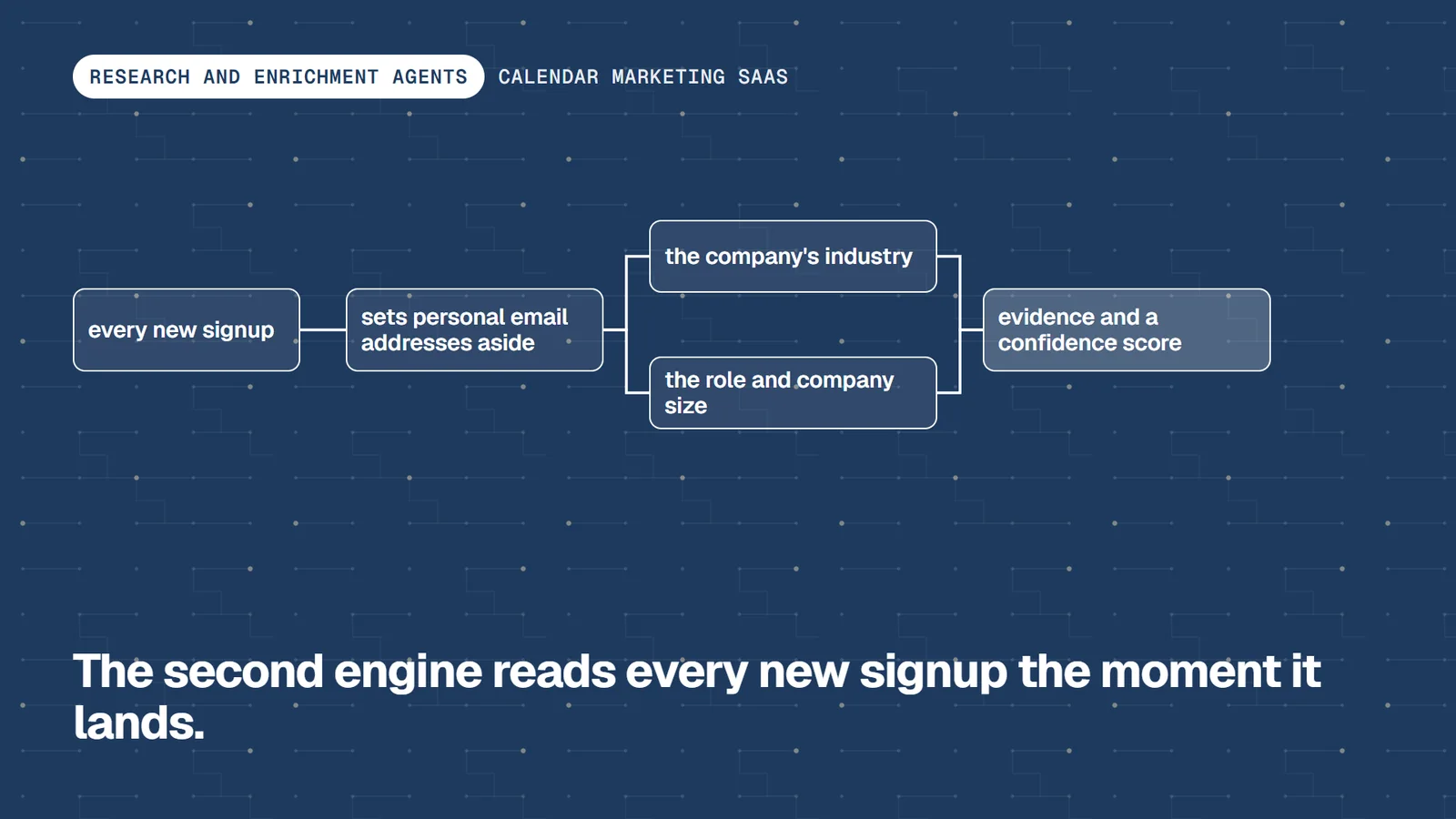
The second engine reads every new signup the moment it lands. It sets personal email addresses aside, then research agents establish the company's industry, which of the platform's three products it would realistically use, and the role and company size of the person who signed up. Every answer comes with evidence and a confidence score, so sales can act on it without checking.
What changed
Brands started seeing traffic from my client in their own analytics, and some came to them asking about the product. That's outbound in reverse: the value arrives first and the conversation starts on the buyer's side. Meanwhile, sales stopped working a raw list of signups and started working a ranked pipeline.
Under the hood
AI research agents, GPT-4o, Firecrawl, Webflow CMS, attribution tagging, Zapier and Apps Script orchestration.