Speed to quote
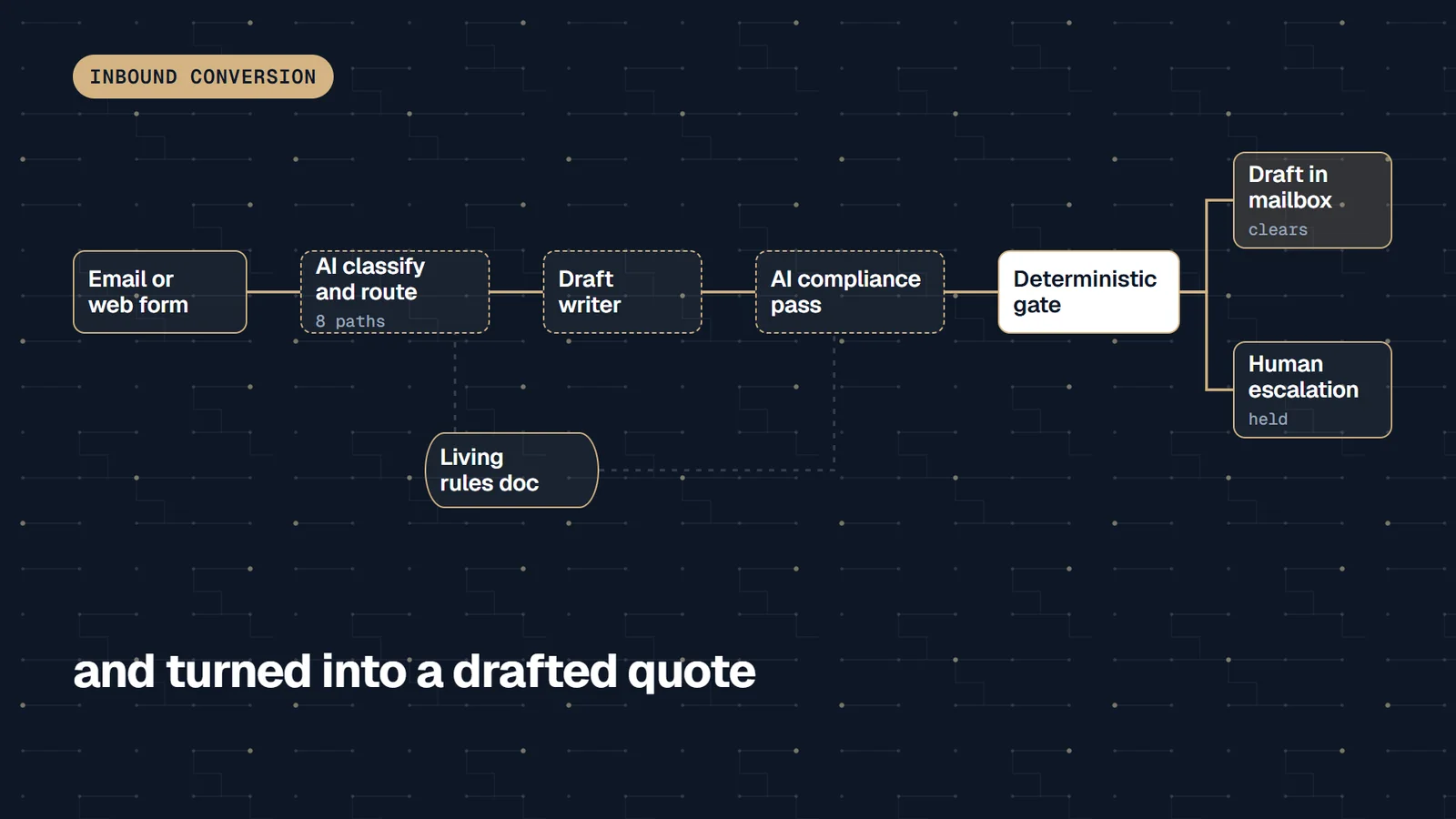
For a translation firm, every email and web form is classified, matched to the client record and turned into a drafted quote, with a hard check that stops a wrong number before it ever reaches a customer.
What I built
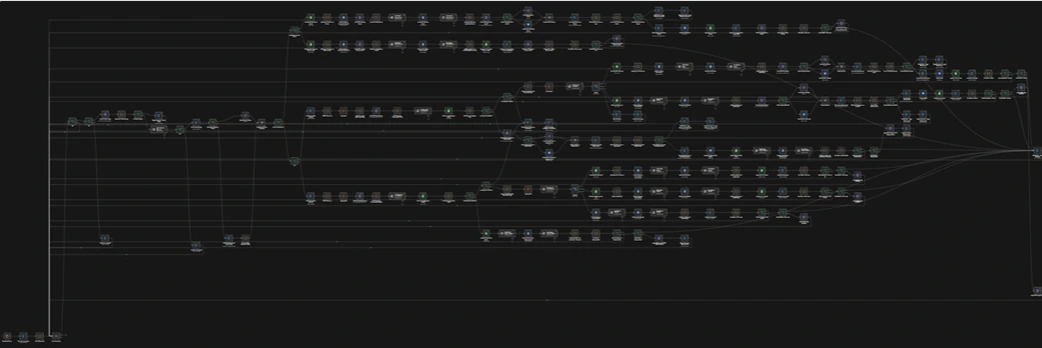
A production system that handles the full first-response lifecycle for a company receiving a high volume of client document requests: it classifies inbound email and web-form enquiries, files attachments, updates a live CRM ledger, and writes ready-to-send replies for human review. Built as two coordinated workflows, a 224-node email pipeline and a 38-node web-intake pipeline, sharing one CRM, one document store and one set of business-rule documents.
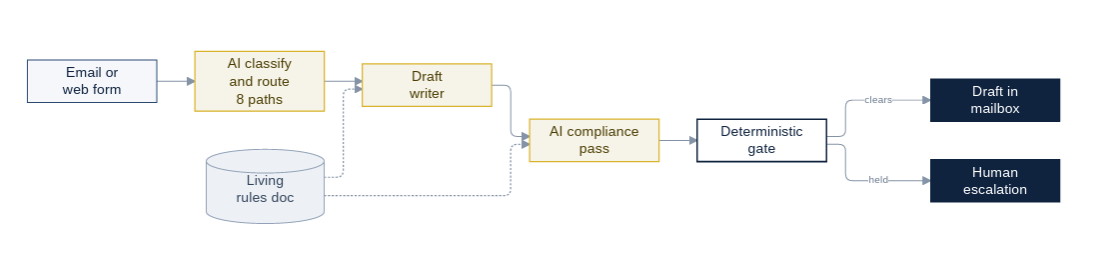
Architecture: eight reasoning paths behind a three-layer safety net
Design decisions
- Eight separate reasoning paths, each with its own tightly scoped model call, instead of one large catch-all prompt
- Business rules live in an editable reference document the AI layers read at runtime, so staff can change behaviour without a deployment
- Thread-aware state matching across mailbox and CRM, so a reply three weeks later still lands on the right record
Production engineering
- Root-caused and fixed an infinite-retry loop, a JSON-injection bug from unescaped input, and a lifecycle gap that could have billed a client twice
- Direct API-level integration work to guarantee correct message threading in cases the standard connector could not handle
Result
Live in production on a real client inbox, with a phased rollout planned across the company's remaining mailboxes.
Under the hood
n8n · Microsoft Graph, Outlook and OneDrive · GPT-5-class models